Choosing a Mulebuy Spreadsheet site, and how this one measures up
Plenty of sites carry the Mulebuy name and a catalogue. A few minutes with the checks below separates the maintained ones from the abandoned.
Signs that a catalogue site is looked after
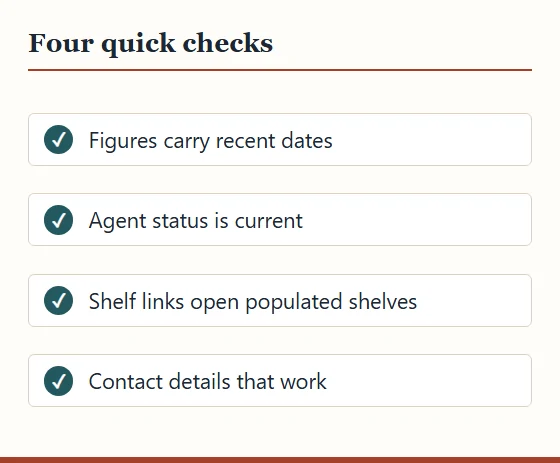
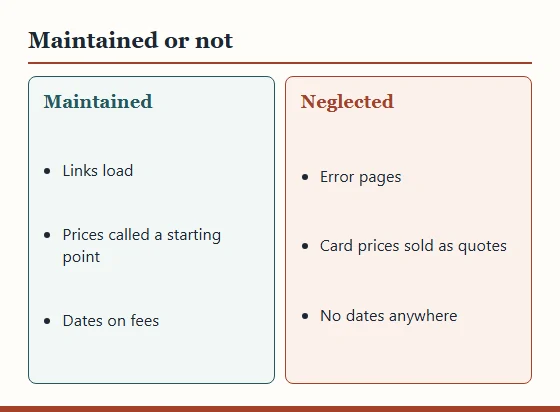
When you choose a Spreadsheet site, start with dates. A maintained site says when its figures were read, and the dates are recent. An abandoned one quotes fees and photo counts with no date at all, or with dates from the spring.
Next, the agent it sends you to. With Mulebuy unreachable since October 2026, a site that still pushes a Mulebuy sign-up button has not been touched for weeks. So has one that describes the agent in the present tense with no mention of its status.
Last, the shelves. Open three or four category links. They should land on populated shelves, not on empty pages or errors.
Broken shelf links and prices that never move
Dead links are the quickest test. On a catalogue site, every shelf link and every agent link should load. Before publishing this version we requested each outbound link on the site and logged the response; the log sits in our records with the date.
Stale prices are harder to spot because a yuan figure on a card looks equally confident whether it was read yesterday or in July. Treat any card price as a starting point and confirm it on the listing. A good site says as much and does not dress card prices up as quotes.
What this site adds to the catalogue
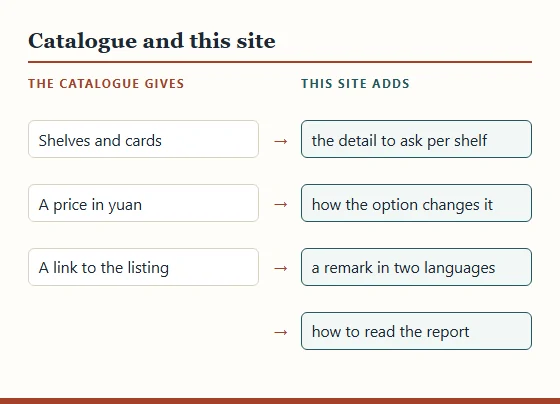
The catalogue is good at one thing, putting finds on shelves. What we do differently is the part between a card and a parcel: the wording of the order remark, in English and Chinese, and the reading of the report that comes back.
Every shelf here comes with the detail to ask for; the remark writer turns that into lines you can paste; the warehouse report page tells you what an answered remark looks like. Those three pieces do not exist on the catalogue itself, and they are the reason this site carries pages rather than just a list of links.
Warning signs on sites that carry the Mulebuy name
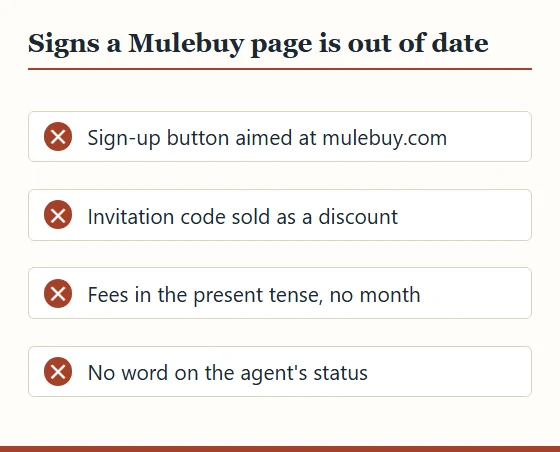
Sites built around one agent age badly when that agent goes quiet. On a Mulebuy-named site, look for three things in particular: a sign-up button that still points at mulebuy.com, an invitation code offered as a discount, and fee or storage figures quoted in the present tense with no month attached.
Each one tells you the page was written before October 2026 and not revisited. That does not make every other line wrong, but it does mean every figure on the page needs checking against an agent's own help pages before you rely on it.
Testing us the same way
Apply the checks above to this site. The updates page lists what we changed and when; the agents page dates every figure; the Mulebuy page says plainly that the agent is unreachable and gives the date we last tried.
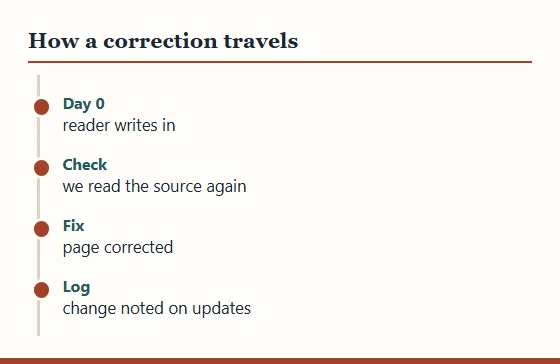
Figures and links are reviewed with their dates. Corrections are recorded on the updates page. No editorial mailbox is currently listed on this site.